WYCLIFFE ANDABWA
Against the odds, Namagara Secondary School, a rural institution in Malava Constituency, has emerged as a shining example of educational excellence. Serving a 100% local student population, the school has produced an impressive 175 university graduates in 2025, defying expectations and setting a new standard for rural schools in the region.
The school’s success can be attributed to the strong support from the community, parents, and stakeholders, said Principal Judith Luvaha. With a population of 923 students, the school has seen significant improvement in performance since its establishment.
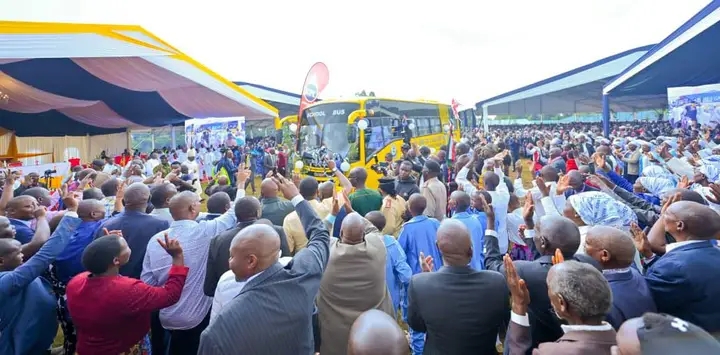
Malava MP, David Ndakwa, who presided over a ceremony to hand over a new bus to the school, emphasized the importance of education in empowering the community. “An educated society is an empowered society,” he said, highlighting the government’s commitment to supporting education in the region.
The new bus is expected to improve transportation for students and enhance their learning experience. The school plans to use the bus to take students on educational tours and excursions, which will broaden their horizons and enhance their academic performance.
The school’s success has not gone unnoticed, with other schools in the area seeking to emulate its model. Principals from Namanja Secondary, Lugusi Boys, Kakunga Girls, and Kimangeti Girls expressed their appreciation for the MP’s support and praised Namagara’s performance.
“The school’s performance is a testament to the power of collaboration and commitment to excellence,” said the Chairperson of the Board of Management, Namagara Secondary. The school’s strong religious background, effective management, and support from parents and stakeholders have all contributed to its success.
The Sub County TSC Director, Remjus, urged teachers to do their part in shaping the future of the community, while the Sub County Director of Education, Roseline Chisumi, praised Namagara for its exemplary performance in grade 10 transition.
The MP’s commitment to completing the programs initiated by the late MP, Moses Malulu Injendi, was welcomed by the community. The Fund Manager, Malava NG-CDF, Humphrey Sechelo, appreciated the MP’s support and urged the public to participate in government projects.
The Manda Shivanga Member of County Assembly, David Iraya Kivishi, urged schools to emulate Namagara’s success and praised the MP for maintaining key feeder roads in the ward. Nominated MCA, Daphne Masinza, emphasized the importance of education in empowering the community.
The community is optimistic about the future of education in Malava, thanks to the MP’s support. The school’s performance is a beacon of hope for the region, demonstrating what can be achieved through hard work and collaboration.
The MP’s advisory committees will oversee different sectors in the constituency to ensure equal development. The community welcomed the MP’s commitment to supporting education and development in the area.
Principal Luvaha thanked the MP for his support and urged the community to continue working together to ensure the school’s continued success.
The MP’s vision for education in Malava is clear: to empower the community through education and create a brighter future for the region’s youth.
The community is rallying behind the MP’s vision, with many expressing their support for his efforts to improve education in the area.
As the MP noted, “Education is the key to unlocking the potential of our youth and driving the development of our community. We will continue to invest in education to create a brighter future for Malava.”
The future looks bright for Namagara Secondary School and the community it serves. With continued support and collaboration, the school is poised to achieve even greater heights.


 ELVIS NYAMA NDOGO